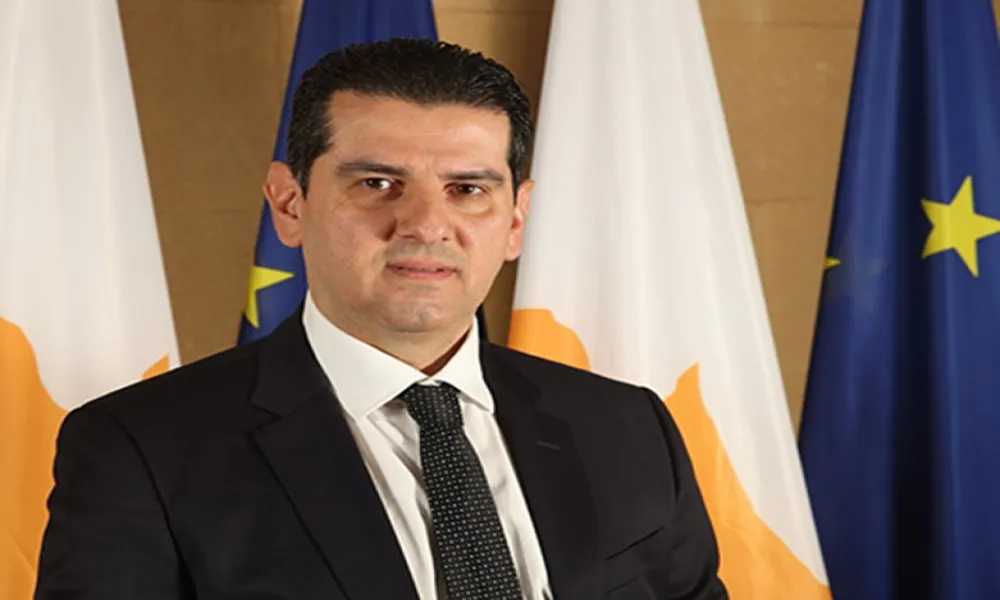

The Energy Minister, Michalis Damianos, has told parliament that curtailments of electricity production from photovoltaic systems will continue, citing Cyprus’s particular circumstances and the sharp increase in renewable energy penetration in recent years. At the same time, he announced that a grant scheme for energy storage installations in businesses will be launched in the second half of 2026.
Responding to a question from Nicosia MP Irene Charalambidou, Damianos acknowledged the problem of solar power curtailments and noted that it is not unique to Cyprus. Similar phenomena, he said, are observed across all EU member states, including those with adequate interconnections and energy storage systems.
He stressed that the legal responsibility for the management and implementation of curtailments does not lie with the Ministry of Energy, Commerce and Industry, but with the Cyprus Transmission System Operator, which is responsible for the secure and stable operation of the electricity network.
Why curtailments are necessary
Curtailments are considered necessary to ensure the stability and safe operation of the electricity system, particularly during periods when renewable energy production exceeds demand or the technical limits of the grid. The Transmission System Operator applies curtailments based on a specific order of priority and technical criteria, in line with the existing regulatory and legislative framework governing the power system.
More specifically, the procedures set out in the Electricity Market Regulation Law, as well as the Transmission and Distribution Rules, are followed. After conventional generation has first been reduced to the maximum technically feasible level, the Transmission System Operator may issue an order to the Distribution System Operator to restrict production.
Restrictions on renewable energy generation initially affect commercial photovoltaic systems and large self consumption installations that have the capability to gradually reduce output. If further action is required, smaller systems without such flexibility, including household installations, are curtailed.
Consumer rights and self consumption
Damianos also pointed out that self consumers of renewable energy now have the right to use their generated electricity for their own consumption during curtailment periods by opting for the technical solution of zero export. This option was introduced through provisions adopted by parliament in the 2025 amendment to the law promoting renewable energy use.
In addition, consumers can apply occasional zero export using additional equipment, allowing them to power their premises with their own production instead of facing a full shutdown of their photovoltaic system. However, in exceptional cases and as a last resort to prevent partial or total blackout of the electricity system, the system operator may also disconnect such systems.
Cyprus’s structural challenges
The minister underlined that solar curtailments in Cyprus are closely linked to the island’s particular electricity system characteristics. Cyprus is the only EU member state without an electrical interconnection, making it a fully isolated energy system where demand and supply must be balanced internally at all times.
He added that the current renewable energy mix, dominated by photovoltaic generation, lacks flexibility. Solar output is non dispatchable and peaks simultaneously across the island. At the same time, Cyprus lacks large scale storage technologies, such as pumped hydro, as well as other controllable renewable sources like biomass, which in other member states contribute to system balancing.
Limited flexibility in conventional generation further compounds the challenge.
Curtailments to continue, mitigation planned
“Taking into account the specific conditions of our country and the increased penetration of renewable energy in recent years, curtailments of household photovoltaic systems will continue,” Damianos said. He added that the integration of energy storage, enabling surplus electricity to be absorbed during periods of overproduction and shifted to periods when the system relies mainly on conventional generation, will significantly mitigate the phenomenon.
The government has already taken a series of measures to reduce the scale of curtailments. These include four grant schemes promoting energy storage installations, the development of central storage systems by the Transmission System Operator, the installation of storage facilities by the Electricity Authority of Cyprus, and the simplification of licensing procedures for storage systems in already approved renewable energy projects.
The Ministry of Energy will proceed, in the second half of 2026, with the publication of a dedicated grant scheme for energy storage installations in businesses.